
Pool Buying & Maintenance Guide
Saltwater vs. Chlorine Pools: Which Is Better?
Saltwater and traditional chlorine pools can both provide clean, safe, clear water. The real difference is how the chlorine gets into the pool, how much day-to-day involvement you want, and which maintenance tradeoffs fit your budget and backyard.
First Things First
Saltwater Pools Still Use Chlorine
A saltwater pool is not a chlorine-free pool. Instead of regularly adding most of its chlorine by hand, it uses a salt chlorine generator to manufacture chlorine from dissolved sodium chloride as the water circulates through an electrolytic cell.
Traditional Chlorine Pool
Chlorine is added directly through products such as liquid chlorine, granular chlorine, or tablets. The owner or service professional tests the water and adds sanitizer as needed.
Saltwater Pool
Pool-grade salt is dissolved in the water. A chlorine generator uses electrolysis to convert that salt into chlorine and continuously replenish sanitizer while the system operates.
Think “automatic chlorine production,” not “no chlorine”
That one distinction makes the rest of the comparison much easier. Both systems rely on chlorine to sanitize the water; saltwater simply changes the delivery method.
Quick Comparison
How Saltwater and Chlorine Pools Compare
Neither system wins every category. The better option depends on whether you value lower upfront cost, automation, water feel, equipment simplicity, or reduced handling of packaged chlorine.
| Category | Saltwater Pool | Traditional Chlorine Pool |
|---|---|---|
| Sanitizer | Chlorine generated from salt | Chlorine added directly |
| Upfront Equipment | Higher | Lower |
| Routine Chlorine Handling | Usually less | Usually more |
| Water Feel | Often described as softer | Depends heavily on chemistry balance |
| pH Monitoring | Important; upward drift can occur | Important |
| Special Equipment | Salt cell + controller | No salt generator required |
| Corrosion Considerations | Greater material-awareness needed | Still possible with poor chemistry |
| Best For | Owners who value automation and convenience | Owners who value simpler equipment and lower entry cost |
Saltwater Pools
Pros & Cons of a Saltwater Pool
Saltwater's biggest advantage is convenience. Its biggest tradeoff is adding another piece of equipment — and another system that eventually needs maintenance and replacement.
Advantages
Tradeoffs
Traditional Chlorine
Pros & Cons of a Traditional Chlorine Pool
Traditional chlorination is simple, proven, widely available, and familiar to pool professionals. The tradeoff is that the owner generally plays a more direct role in replenishing sanitizer.
Advantages
Tradeoffs
Swimming Experience
Does Saltwater Actually Feel Better?
Many swimmers describe saltwater pools as softer and gentler-feeling, but the experience in either pool depends heavily on how well the water chemistry is maintained.
Saltwater Feel
The relatively low salt concentration can give the water a softer, silkier feel. Because chlorine is generated gradually, properly maintained salt systems can also avoid large swings in sanitizer level.
That “Chlorine Smell”
A strong pool odor does not automatically mean there's too much effective chlorine. CDC explains that the familiar odor and much of the eye irritation associated with pools can come from chloramines formed when chlorine reacts with swimmer contaminants.
Good chemistry matters more than the label
A poorly maintained saltwater pool can be uncomfortable, and a properly balanced traditional chlorine pool can feel excellent. Sanitizer type does not replace good water balance.
Maintenance
Which Pool Is Easier to Maintain?
Saltwater usually reduces how often you manually add chlorine, but both pools still require testing, filtration, brushing, vacuuming, and balanced water chemistry.
Saltwater Routine
Monitor free chlorine, pH, alkalinity, calcium hardness, cyanuric acid, and salt level. Inspect the salt cell for scale and confirm that chlorine output matches the pool's demand.
Traditional Chlorine Routine
Monitor the same core water chemistry while regularly replenishing chlorine through the chosen dosing method and watching stabilizer levels if stabilized products are used.
Saltwater owners need to watch pH
Salt chlorine generators can contribute to upward pH drift, so automation does not mean ignoring your test kit. The generator handles chlorine production — not every part of water balance.
Ownership Cost
Saltwater Costs More Upfront — But That's Not the Whole Story
The better financial comparison is not just what the system costs today. Think about equipment, chemicals, replacement parts, electricity, and maintenance over several swimming seasons.
Saltwater Cost Pattern
Higher upfront investment because the pool needs a salt chlorine generator and salt. Routine chlorine purchases may be reduced, but the salt cell is a wear component that eventually needs replacement.
Traditional Chlorine Cost Pattern
Lower initial equipment expense, but owners regularly purchase chlorine products throughout the swimming season. Chemical costs vary substantially with pool size, weather, usage, and local pricing.
Don't make the decision on chemical cost alone
If convenience matters more to you than minimizing upfront spending, saltwater may still be worth it. If you prefer a simpler system with fewer specialized components, traditional chlorine may make more financial sense even if you buy more sanitizer over time.
Materials & Equipment
Does Saltwater Cause Corrosion?
Salt increases the corrosion potential around susceptible metals and certain materials. That doesn't automatically make saltwater a bad choice — but compatibility should be considered before installing or converting a pool.
Material choice matters
If you're building a new pool, discuss the sanitation system early enough that the builder can choose compatible equipment, hardware, coping, decking, and accessories rather than treating saltwater as an afterthought.
Salt System Ownership
The Salt Cell Will Not Last Forever
The chlorine generator is what gives a saltwater pool its convenience, but the electrolytic cell is a wear component. Its lifespan depends on runtime, water chemistry, mineral scale, system sizing, and how well the unit is maintained.
Inspect for Scale
Calcium deposits can form on the electrolytic plates, reducing performance. Modern systems often include self-cleaning features, but inspection may still be necessary.
Maintain the Correct Salt Level
Too little salt can prevent adequate chlorine production and make the system work harder. Always follow the generator manufacturer's operating range.
Match Output to Demand
Hot weather, sunlight, storms, and heavy swimming can increase chlorine demand. Generator output may need adjustment rather than being left at one setting all season.
Budget for Replacement
Eventually the cell's chlorine-producing capacity declines. Treat cell replacement as a normal long-term ownership expense, not an unexpected failure.
Which One Fits You?
Choose Based on How You Want to Own the Pool
Both systems can sanitize a pool well. Your lifestyle and ownership preferences may be more important than any technical advantage on paper.
Saltwater May Be Better If...
You value automated chlorine production, dislike routinely handling chlorine products, prefer softer-feeling water, and are comfortable with higher upfront equipment cost and maintaining a salt cell.
Traditional Chlorine May Be Better If...
You want the lowest initial equipment cost, prefer simpler pool equipment, don't mind routine chemical dosing, or already feel comfortable managing chlorine manually.
For Busy Pool Owners
Saltwater can reduce one recurring maintenance task, but professional pool service can make either system relatively hands-off.
For Budget-Conscious Owners
Traditional chlorination usually wins on initial setup cost. Compare the entire ownership picture before assuming one system will always be cheaper in the long run.
Pool Conversion
Can an Existing Chlorine Pool Be Converted to Saltwater?
Often, yes. Because both systems ultimately use chlorine, the conversion is mainly about installing the generator, bringing the water into the manufacturer's recommended salt range, and confirming that the pool's materials and equipment are compatible.
Don't convert blindly
Before adding salt, check warranties and compatibility for the pool, heater, equipment, surrounding materials, and any metal components. A pool professional familiar with salt systems can help identify issues before they become expensive ones.
Whichever System You Choose
Clear Water Isn't Enough — Test the Chemistry
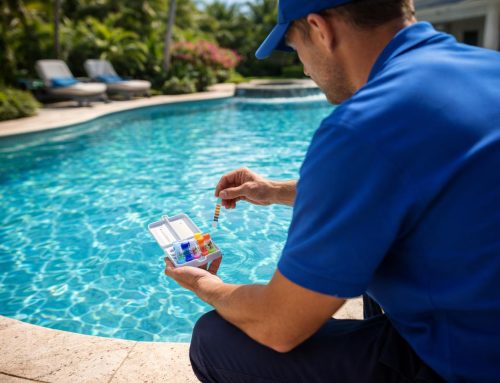
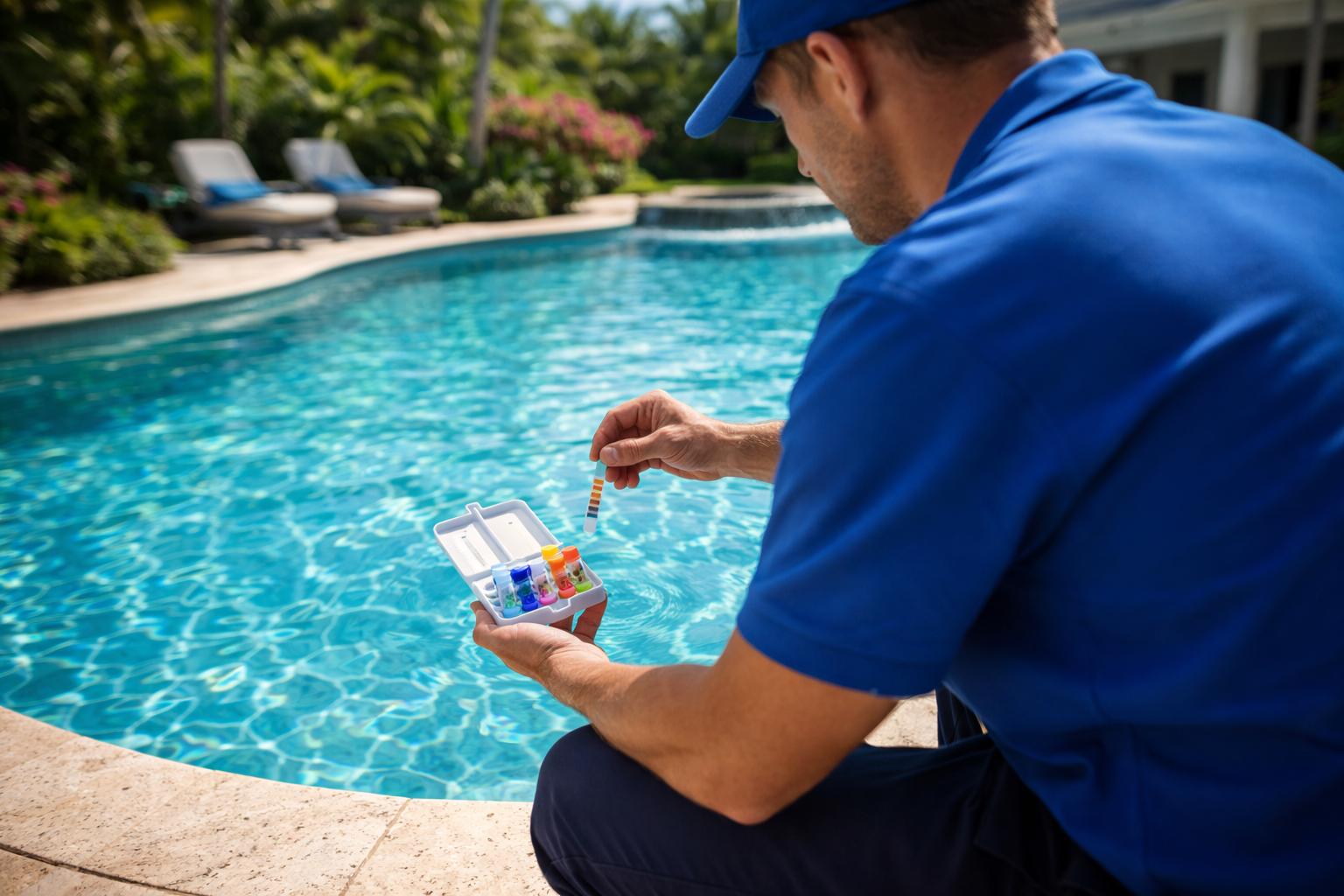
A pool can look clear and still have poor sanitizer or pH levels. Whether chlorine comes from a bucket or a salt cell, the water still needs to be tested and maintained within safe ranges.
Monitor Free Chlorine
Chlorine is consumed by sunlight, swimmers, dirt, organic contamination, and other factors. The sanitizer level needs to match current demand.
Monitor pH
pH affects both swimmer comfort and how effectively chlorine kills germs. Water that drifts too far out of range can also contribute to scaling or corrosion.
The Bottom Line
Saltwater vs. Chlorine: Neither Is Automatically Better
Choose saltwater if you value automated chlorine production,
less routine handling of sanitizer, and a softer-feeling swimming
experience enough to justify the additional equipment and maintenance.
Choose traditional chlorine if you want a simpler setup,
lower upfront equipment cost, and don't mind managing chlorine
more directly.
Either system can produce excellent pool water when it is properly
designed, balanced, circulated, filtered, and maintained.
The better choice is the one that matches how you actually want
to own and care for your pool.
Keep Learning Before You Build
Compare Your Pool Options Before Making the Investment
Explore more practical pool guides or compare West Tennessee pool professionals who can help with construction, equipment, water care, remodeling, and ongoing pool service.






Leave A Comment